 Color Fun
The Science Behind Coloring and Stress Relief
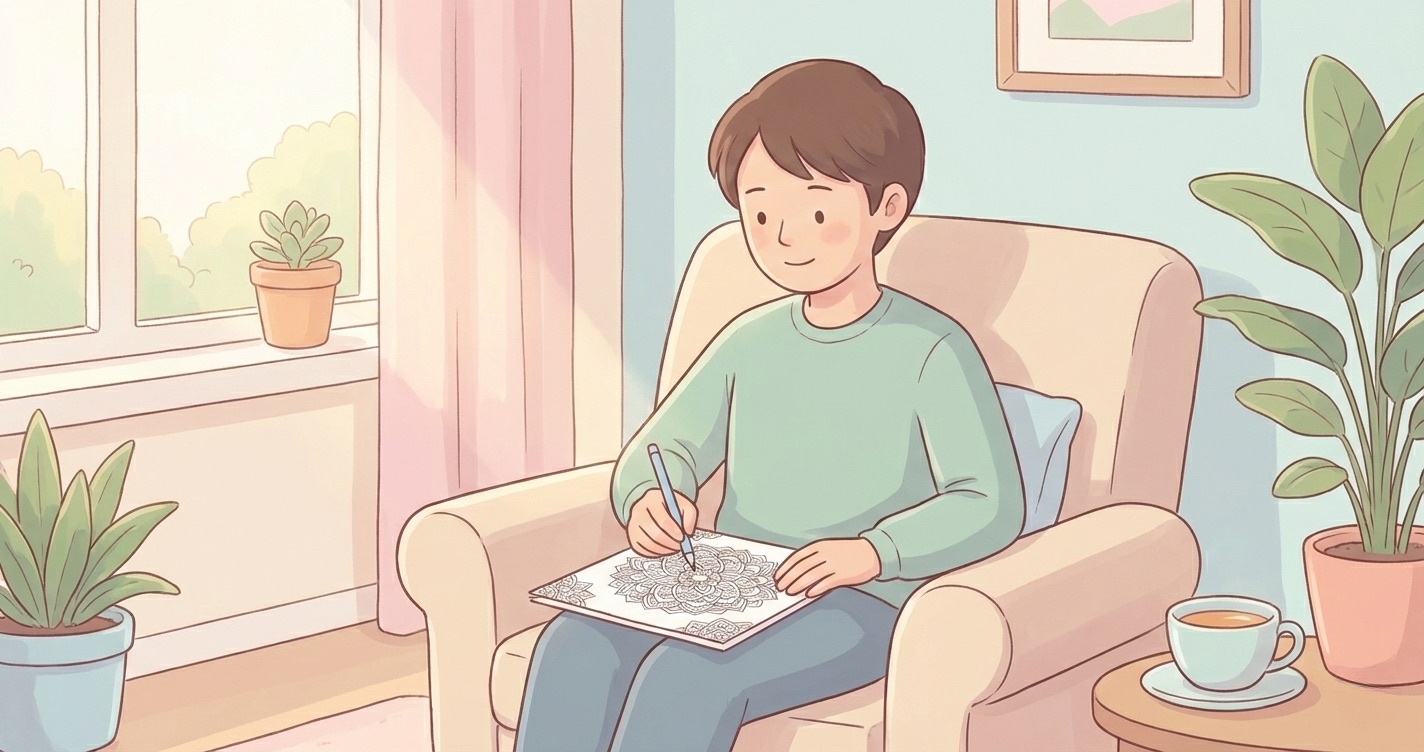
A serene scene of a person peacefully coloring with soft lighting, surrounded by calming pastel colors and completed artwork.
You've probably noticed it: somewhere around ten minutes into a coloring session, something shifts. The mental noise that follows you through the day gets quieter. Your shoulders drop slightly. Time starts moving differently. It doesn't feel like nothing — it feels like something genuinely helpful is happening.
That's not a placebo effect. There's real neuroscience behind it.
**What happens in your brain when you color**
Coloring activates the parasympathetic nervous system — the part responsible for rest, digestion, and recovery. This is the biological opposite of the fight-or-flight response that stress triggers. As you settle into a coloring session, your cortisol levels (the primary stress hormone) measurably decrease. Studies have found that as little as twenty minutes of focused creative activity produces a significant reduction in anxiety markers.
**The flow state and why coloring triggers it**
Psychologists use the term "flow" to describe a state of complete, effortless absorption in a task — the feeling athletes call being "in the zone." Flow requires a specific balance: the task must be challenging enough to demand attention, but not so difficult that it creates anxiety. Coloring hits this balance almost perfectly. There's always something to decide (which color? how much pressure? where next?) but nothing is truly at stake. The result is sustained, low-pressure focus — the same neurological state that makes flow feel so restorative.
**Mindfulness without the effort**
One of the difficulties many people encounter with traditional mindfulness practices is that they require you to actively redirect your attention when it wanders. Coloring provides a gentler on-ramp. The physical activity naturally anchors attention to the present moment — to the color in your hand, the area you're filling, the texture of the paper — without requiring conscious effort to stay there. It's mindfulness through doing rather than through sitting still.
**The bilateral stimulation effect**
Some art therapists point to the repetitive, rhythmic side-to-side motion of coloring as a potential contributor to its calming effect. Bilateral stimulation — activating both sides of the brain in alternating sequence — is a technique used in trauma therapy (EMDR) and has been associated with reduced emotional intensity and improved processing of difficult thoughts.
**Practical implications**
You don't need to approach coloring as a therapeutic intervention for these benefits to apply. Just doing it consistently — even briefly, even imperfectly — is enough. Ten minutes before bed instead of scrolling. Twenty minutes on a difficult afternoon. The neurological effects don't care whether you finished the page.
Color Fun generates a fresh page in seconds, for any theme and any complexity level. Start your own practice at https://colorfun.app/ — the Nature category is particularly calming: https://colorfun.app/nature